
A clogged bath drain can hold water, slow down your routine and cause some nasty smells. This guide gives homeowners and DIYers clear, safe steps to find the cause, try reliable unblock methods, and know when to call in a professional. You’ll get practical, step-by-step fixes, from plunging and natural cleaners to using a drain snake. We'll also give you simple ways to figure out where the clog is and how risky a solution might be. We focus on safety and how to step things up: try the right home remedies first, avoid doing anything that could make the problem worse, and learn when Mitchel Plumbing & Gas should take over. By the end you’ll have a prioritised checklist of actions to try now and a clear understanding of professional options if the clog just won't budge.
A bath drain gets blocked when materials build up inside the pipe and stop water from flowing freely. Most often hair and soap scum knit together and cling to the stopper or tailpiece. Mineral scale from hard water or small foreign objects can also narrow the pipe and slow drains. Early signs like slow draining, standing water, gurgling noises or strange smells usually mean you can clear the clog with some simple, low-risk DIY steps. The sections that follow explain common causes and practical clues that help you figure out exactly where the clog is so you can choose the right method and avoid unnecessary work.
This guide focuses on safe DIY fixes, but it helps to know how commercial decloggers chemically target hair and soap buildup.
How Commercial Decloggers Attack Hair & Soap Scum
Many commercial cleaners break down the proteins in hair or change the chemistry of soap scum so the deposits loosen and wash away more easily.
5 Specialty Cleaners, 2008
The most common culprits are hair and soap scum forming dense mats that catch on the stopper or inside the tailpiece. Hard water mineral deposits can slowly reduce pipe diameter, which makes hair and grease build up faster, especially in older metal plumbing. Small toys, cotton swabs, or too many so-called “flushable” wipes can lodge deeper in the trap and cause stubborn backups. Knowing which of these is likely helps you pick the right way to get rid of it: surface hair removal for clogs near the stopper, a snake for deeper rubbish, and a professional inspection for ongoing scale issues or foreign objects.
Recognising the role of soap scum and hard water helps you target both treatment and prevention.
Why Soap Scum and Hard Water Make Clogs Worse
Soap scum is hard to dissolve and stays on pipe walls; hard water reduces lather and leaves mineral residue that traps dirt and dulls hair.
Watch for slower-than-normal draining, a visible water line after showering or bathing, and intermittent gurgling when other fixtures run. These usually mean there's a partial blockage. Standing water or a full block points to a clog near the stopper or P-trap, while slow drains or gurgling across multiple fixtures suggest a trunk line or sewer issue. Foul or sewage-like odours often indicate organic buildup or a sewer-side problem and should be addressed quickly. Quick checks, like removing the stopper, testing the overflow, and seeing if other drains are affected, will tell you whether a simple DIY fix is worth trying or if it's time to call in a professional.
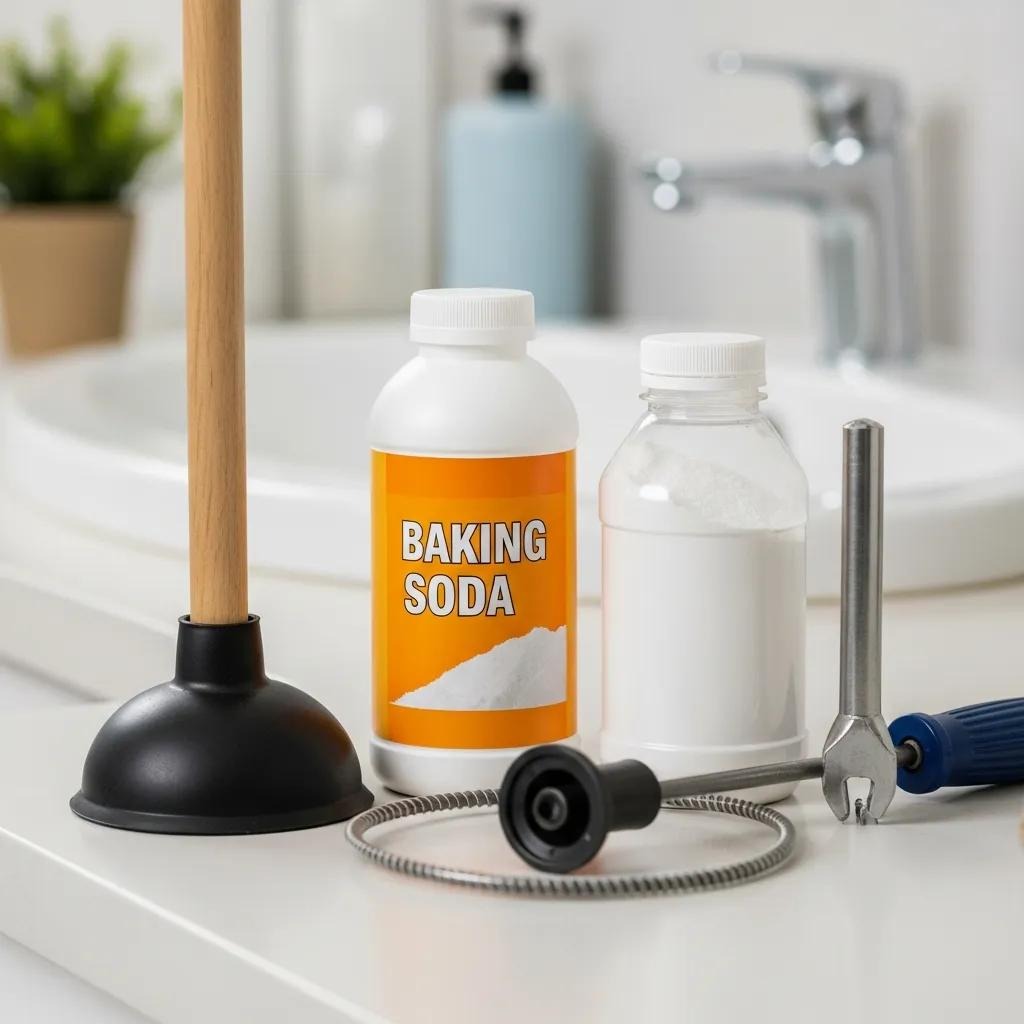
Most common bath drain clogs can be cleared at home if you follow a sensible progression: start with noninvasive steps (pulling out surface hair, flushing with hot water), move to suction-based tools (plunger), then use a drain snake for deeper obstructions. Avoid harsh chemical cleaners when possible. They can damage pipes and usually don’t remove dense hair mats. Below is a quick comparison of common DIY approaches and a clear action plan so you know which method to try first based on the clog’s likely depth.
Different methods suit different problems and comfort levels; the table below summarises best uses and what you’ll need.
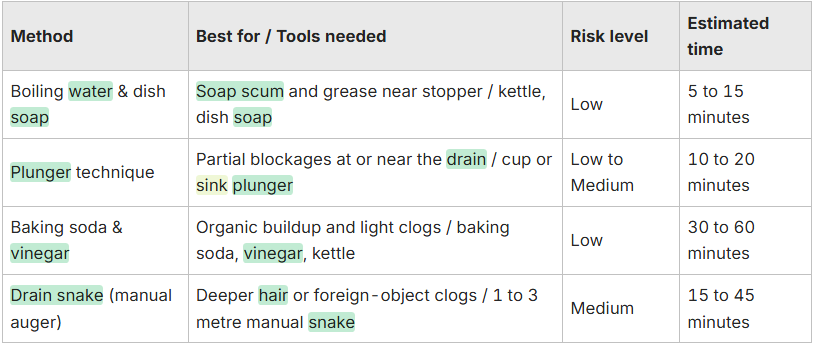
Use low-risk flushing and plunging for surface clogs first; if those don’t work, reach for a manual snake for deeper obstructions. Stop and call a professional if the clog won’t move or if you suspect damaged pipes. Forcing tools can make the problem much worse.
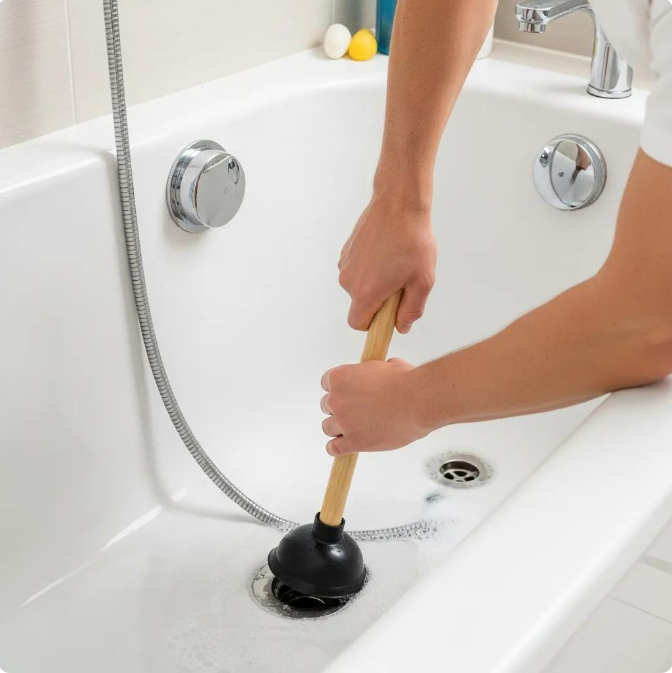
A plunger works by creating pressure and suction to dislodge clogs. Make a solid seal over the drain and block the overflow with a wet rag so suction concentrates on the drain opening. Push down gently to expel trapped air, then do 8 to 12 firm, quick plunges while maintaining the seal. After a few cycles, check the flow. If water drains slowly or the plunger feels blocked, stop and try a different method (like a manual auger) rather than pushing the rubbish further down the line.
The baking soda and vinegar method uses a mild chemical reaction to loosen light organic buildup and soap scum; hot water then flushes the loosened material out. Use about 1/2 cup baking soda followed by 1/2 to 1 cup of white vinegar. Expect fizzing. Let it sit for 15 to 30 minutes, then pour a pot of boiling or very hot water to rinse. This approach is safe for most modern pipes and is best as a preventive monthly treatment or an initial noninvasive attempt; it rarely clears dense hair clogs or hardened scale.
This simple home remedy relies on a basic acid–base reaction to help break up soft deposits.
Baking Soda & Vinegar Drain Cleaning Method
Sprinkle baking soda down the drain, add about 1/2 cup of vinegar, wait for fizzing, then rinse with hot water.
The Dynamic Duo: Vinegar and Baking Soda Two-Volume Set, 2016
If simple steps fail, try advanced DIY methods that still avoid professional intervention: remove and clean the drain stopper, or use a manual drain snake to reach deeper clogs. These require a bit more confidence and care. PVC and modern fittings tolerate augers well, but older cast-iron or corroded pipes need gentler handling. Inspect the tailpiece after removing the stopper and feel for resistance as you work the snake; if a blockage just won't budge with steady, controlled effort, stop and consider calling in the professionals to avoid damaging your pipes.
If advanced DIY doesn’t clear the issue, Mitchel Plumbing & Gas can help with diagnostic tools and mechanical solutions. Our plumbers use camera inspections and mechanical augering to locate and remove stubborn blockages safely. Try safe advanced DIY first, and contact us if you encounter immovable rubbish, signs of pipe damage, or recurring clogs. Stopping at the right time protects your plumbing and saves you money over the long term.
Most stoppers (lift-and-turn, pop-up, toe-touch) come out by removing a retaining screw or pivot rod: unscrew or pull the assembly, then pull out trapped hair and scum by hand or with a soft brush. Wash parts in warm, soapy water and use an old toothbrush to clear soap film from the stopper and strainer. Look into the tailpiece for further rubbish. When you reassemble, seat seals and gaskets correctly and run water to check for leaks at the P-trap. If a stopper is stuck, don't force it. Try a penetrating lubricant or call in a professional to avoid damage.
A manual drain snake (auger) reaches into the tailpiece and P-trap to break up or pull out hair and rubbish. Pick a snake length that fits your drain. 1.5 to 3 metres is common for tubs, and you'll want a flexible head for those tight bends. Feed the snake gently, rotate clockwise and advance until you feel resistance, then rotate and pull back to break up or extract the clog. Avoid sudden, forceful movements that can score PVC or harm old cast-iron fittings. Clean the cable between passes and repeat until the cable moves freely and water drains normally. If the cable jams or meets solid resistance that won’t yield, stop. That's a sign a camera inspection by a professional is the safer next step.
Call a professional plumbers when symptoms point to a deep, recurring, or system-wide problem that DIY can’t safely fix: sewage backing into the tub, multiple fixtures affected, clogs that return after clearing, visible leaks, or strong sewer odours. Mitchel Plumbing & Gas offers services like camera inspection, mechanical augering, and hydro-jetting to diagnose and treat deeper obstructions while minimising invasiveness. The table below summarises common professional solutions, what they do, typical cost expectations, and how invasive they are so you can decide when to escalate.
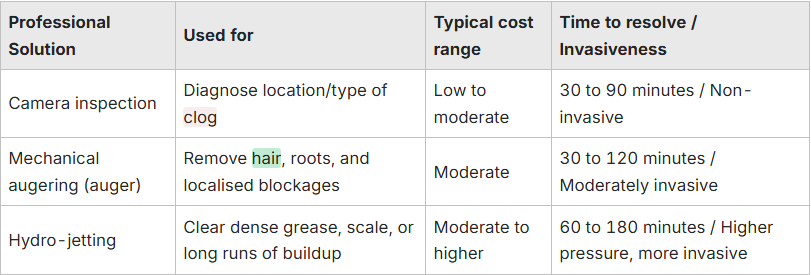
Seek professional help for red flags like sewage backing into the tub, persistent sewer smells, slow drainage across multiple fixtures, clogs that come back quickly, visible leaks, or crumbly/corroded pipe material. If basic diagnostics, like removing the stopper, testing other drains, and plunging, don't fix the problem, a camera inspection will figure out the exact issue and guide the least invasive repair. Following these escalation cues prevents bigger damage and helps you get a faster, more cost-effective fix.
Professional work starts with a diagnostic check, often a camera inspection, to find the clog and decide whether it’s hair, scale, roots, or a foreign object. Mechanical augering clears physical blockages inside the pipe; hydro-jetting uses high-pressure water to scour grease and mineral buildup along longer runs.
Plumbers should explain findings, recommend the right treatment, and confirm flow and leak-free operation after the job. Prepare by clearing the area and giving access to the drain; the goal is a durable repair that reduces how often it happens again and protects your pipes.
Preventive care reduces emergency calls and extends the life of your pipes. Combine good habits with periodic maintenance: remove visible hair after each use, run hot water for 30 seconds weekly to keep grease moving, and do a monthly non-chemical flush (boiling water or a baking soda and vinegar cycle). For homes that collect a lot of hair, install and maintain a strainer. This keeps most of the rubbish out of the tailpiece and P-trap and increases time between deeper cleanings. The sections below list simple maintenance steps and guidance on choosing the right strainers to protect your drain over time.
A simple schedule prevents most clogs: clear hair from the stopper after each use, run hot water weekly, and do a monthly baking soda and vinegar cycle followed by hot water. Clean the stopper and strainer monthly. Lift them out, remove any rubbish, scrub with a brush, and then put them back in. If slow drainage returns within weeks, schedule a preventive inspection to catch developing scale or hidden obstructions before they harden. Small, consistent steps reduce the need for mechanical clearing and extend the life of drain parts and pipes.
Strainers and hair catchers stop hair and larger bits of rubbish at the surface so mats don’t form deeper in the trap. Mesh strainers catch fine hair but need frequent cleaning; silicone or pop-up filters are easier to clean and can seal better with some stoppers. Pick a model that fits your drain and is simple to remove for routine cleaning. Fit the strainer flush in the drain opening and empty it weekly to avoid odours and soap buildup. Using a strainer consistently reduces pipe wear and keeps most clogs manageable, saving time and money over the long run.
If you prefer professional preventive care, Mitchel Plumbing & Gas offers inspections and scheduled drain servicing to complement at-home maintenance; our diagnostic checks can spot early scale or pipe issues before they become recurring clogs. Pairing periodic professional inspections with the everyday habits above is the most reliable way to minimise blockages and keep your plumbing working well for years.

Ever heard those mysterious banging noises from your hot water system or found unexpected leaks around your heater? You might be dealing with pressure problems that an expansion tank could solve. Most Brisbane homeowners don't realize that when water heats up, it expands and needs somewhere to go. Without an expansion tank, this extra pressure can damage pipes, stress your water heater, and lead to expensive repairs.

A comprehensive guide to the 9 different types of solar hot water systems available in Brisbane. From budget-friendly flat plate collectors to premium evacuated tube systems, learn about the pros, cons, efficiency ratings, and costs of each option. Most solar hot water systems can provide between 50-100% of your home's hot water needs, with installation costs ranging from $2,000 for basic systems to $9,000 for premium configurations. Find out which system is best suited for your household size, climate conditions, and budget to maximize energy savings while ensuring reliable hot water supply year-round.

Heat pump hot water systems extract heat from surrounding air to efficiently warm water, using up to 75% less electricity than traditional systems. Leading Australian options include Reclaim, Sanden, Rheem, Rinnai, Dux, and Evoheat, each offering unique advantages for different household needs. These systems provide lower operational costs, reduced emissions, and eligibility for government rebates. With COPs of 3.0-5.0, they significantly outperform conventional electric and gas systems. When selecting, consider household size, climate conditions, available space, and noise levels to find the perfect match for your Brisbane home.
Get a Quote


.svg)
